
FpoGrow Smart Agritech for Traceability Insights and Growth

Agribusiness fails when records live in too many places. A field book holds farmer details. A spreadsheet tracks procurement. A warehouse register shows stock. A finance tool records payments. By the time leaders need a clear answer, the data is already late or incomplete.
FpoGrow addresses that gap with a connected agritech platform built for farmer-facing organizations and growing agricultural businesses. It supports complex operations, tracks produce from farm to buyer, and turns daily field activity into useful business data.
The platform is designed for organizations that manage farmers, field teams, procurement, input distribution, aggregation, training, marketplaces, and reporting. That includes farmer producer organizations, farmer producer companies, cooperatives, NGOs, commodity businesses, processors, and other rural enterprises.

FpoGrow brings complex agribusiness operations into one system
Agribusiness work does not follow a simple path. A single season can include farmer onboarding, crop planning, input sales, training visits, advisory messages, quality checks, procurement, warehouse handling, buyer orders, payments, and compliance reports.
When each activity runs in a separate tool, managers lose visibility. Field teams repeat data entry. Farmers wait for updates. Leaders make decisions using old information.
FpoGrow brings these activities into one operating system. The goal is not only digitization. It is control over how work moves from the field to the back office and then to the market.
A well-designed platform helps teams manage:
Operating area | What FpoGrow helps track |
Farmer and member records | Profiles, land details, crops, groups, and participation history |
Field operations | Visits, surveys, training attendance, crop activities, and issue reporting |
Procurement | Collection records, quality checks, weights, grades, and farmer-wise transactions |
Inventory | Input stock, produce stock, warehouse movement, and batch-level records |
Finance workflows | Receivables, payables, farmer payments, and transaction summaries |
Market access | Buyer demand, product listings, order records, and fulfillment status |
Reporting | Program progress, team performance, crop data, and business dashboards |
This matters because farmer-facing organizations often handle both social goals and business goals. They support producers, but they also need to run viable operations. FpoGrow helps connect both sides.
For an fpo,fpc, Agritech adoption works only when the platform supports real field conditions. That includes low-friction data entry, mobile access, role-based workflows, and records that can stand up to audits, buyer checks, and internal reviews.
End-to-end traceability builds trust from farm to market
Traceability is no longer a “nice to have” feature in agriculture. Buyers want to know where produce came from. Exporters need cleaner documentation. Processors need batch-level records. Farmer organizations need proof of procurement, quality, and payment.
At its core, traceability answers a few clear questions:
Who produced the crop?
Where was it grown?
What practices were followed?
When was it harvested?
How was it collected, graded, stored, and sold?
Which farmer or batch links to which buyer transaction?
FpoGrow supports this record chain by connecting farmer data, crop data, field activity, procurement, inventory, and sales. This creates a traceable path from farmer registration to final transaction.
That chain is important because traceability depends on continuity. A batch ID is not useful if it only appears at the warehouse. A farmer profile is not enough if procurement records are separate. FpoGrow keeps these links together.
Widely used traceability methods in food and agriculture rely on identifiers, timestamps, location records, batch movement, and transaction history. Standards such as GS1 also emphasize the need to identify products, locations, and events across supply chains. FpoGrow follows the same practical logic by making each operational step part of a connected record.

Traceability helps with more than compliance
Good traceability also improves day-to-day management.
If a buyer asks for the source of a lot, the team can check records faster. If quality drops in one area, managers can review farm practices, collection timing, or storage conditions. If a farmer disputes a transaction, the organization can compare weight, grade, date, and payment details.
Traceability also supports better farmer service. Teams can identify which farmers supplied which crops, which farmers attended trainings, and which groups need more support before the next season.
This is where digital tools create a real advantage. Paper records can capture information, but they are hard to search. Spreadsheets can help, but they break when many people update them. A connected platform reduces those gaps.
Data-driven insights support better business decisions
Data has value only when it improves decisions. FpoGrow turns field and transaction data into dashboards and reports that leaders can use.
A procurement manager may want to know which collection centers are receiving the highest volume. A program lead may need training attendance by village. A finance team may need pending farmer payments. A business head may want trends by crop, season, grade, or buyer.
FpoGrow supports these decisions by organizing data around operations rather than isolated forms. The result is faster review and cleaner follow-up.
The most useful insights often come from simple questions:
Which farmers are active this season?
Which crops are expected in the next harvest window?
Which villages show higher production?
Which field officers completed assigned visits?
Which batches had quality issues?
Which buyers are linked to repeat orders?
Which payments are pending or completed?
These answers help organizations act earlier. They can plan procurement routes, guide field staff, schedule trainings, manage inventory, and prepare buyer commitments with more confidence.
Better data can reduce avoidable losses
Agriculture faces many risks that digital tools cannot remove. Weather, pests, price changes, and logistics delays can still hurt outcomes. But better data can reduce avoidable losses.
For example, if crop estimates show a larger harvest in one cluster, the organization can arrange collection capacity in advance. If field reports show pest pressure in a specific area, the team can plan advisory support. If stock dashboards show slow movement in a warehouse, sales teams can act before quality declines.
These are practical gains. They come from connecting field information with business workflows.
Good data also supports credibility. Banks, buyers, donors, and partners often ask for reliable records. A platform that tracks activity across the season can help organizations present clearer evidence of scale, performance, and farmer engagement.
Mobile apps make field execution easier
Field teams carry a large share of agribusiness operations. They register farmers, collect crop details, conduct surveys, support training, record procurement activity, and report field issues. If the mobile app is hard to use, the entire system slows down.
FpoGrow’s mobile applications are built for field personnel who need speed and clarity. The design focus is practical work, not complex software navigation.
A good field app should support:
Quick farmer search and profile updates
Simple forms for field visits and surveys
Crop and acreage records
Training attendance capture
Procurement entries with weight, grade, and price
Photo or document capture where needed
Sync between mobile activity and central dashboards
Role-based access so each user sees relevant tasks
The secondary value is consistency. When every field officer records information in the same structure, managers get cleaner data. That improves reporting and reduces follow-up calls.
This is especially useful for farm management, field officer, farmer registrations because these activities create the base record for everything that follows. If the first record is incomplete, procurement, payment, and traceability suffer later.
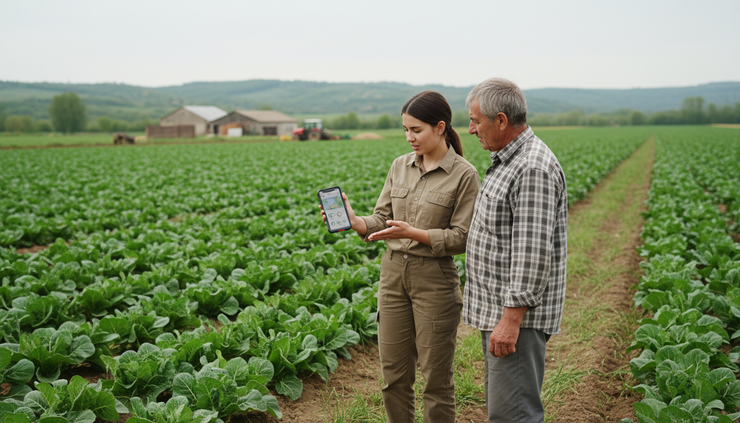
Mobile design matters for adoption
Agritech platforms succeed only when people use them consistently. That means mobile screens must match field reality.
Field personnel may work in remote areas. They may need to capture data quickly between visits. They may support farmers who speak different languages or have different levels of digital comfort. The app must make routine work easy.
A simple mobile workflow can reduce errors in three ways.
It limits repeated data entry.
Once a farmer profile exists, the team can reuse the record across crop planning, training, procurement, and payments.
It standardizes the process.
Required fields, dropdowns, and validation rules help maintain data quality.
It improves accountability.
Managers can see activity status, pending tasks, and field coverage without waiting for end-of-week summaries.
That creates a better operating rhythm for the whole organization.
Connected farmers get clearer visibility and better access
A strong agritech platform should not only serve managers. It should also improve the farmer experience.
FpoGrow supports connected farmers with real-time visibility into relevant transactions. This can include procurement details, payment status, input purchases, advisory updates, or marketplace activity, depending on the tools enabled by the organization.
Real-time visibility matters because farmers often face information gaps. A farmer may sell produce but wait for confirmation of weight, grade, or payment. A digital transaction record reduces confusion and builds trust.
For farmer organizations, this trust has direct business value. When farmers can see records clearly, they are more likely to stay engaged, participate in programs, and transact through the organization.
Training platforms help convert advice into action
Training is central to agricultural improvement. Farmers need timely guidance on crop practices, pest management, quality standards, post-harvest handling, and market requirements.
FpoGrow can support customized training platforms that help organizations plan, deliver, and track learning. This may include training calendars, attendance tracking, learning materials, farmer group mapping, and follow-up records.
The benefit is not just content delivery. The bigger benefit is measurement.
Organizations can see who attended sessions, which topics were covered, and where more support is needed. Field teams can connect training history with crop performance or procurement quality over time.
That makes training more accountable.
Marketplaces help connect supply with demand
Market access is one of the biggest challenges for small producers. Digital marketplaces cannot solve every pricing or logistics issue. They can, though, improve visibility between available produce, buyer demand, and transaction records.
FpoGrow’s marketplace tools can help list products, manage interested buyers, coordinate orders, and record fulfillment. This supports both farmer-facing organizations and buyers who need better sourcing information.
When marketplace activity connects with farmer records and traceability data, the organization gains a stronger sales story. It can show where produce came from, what volume is available, and how transactions were handled.
That is far better than a standalone listing tool.
FpoGrow supports different agribusiness segments
Agribusiness is not one kind of operation. A farmer producer company has different needs from an NGO program. An input distributor has different workflows from a processor. A marketplace operator has different priorities from a cooperative.
FpoGrow’s value comes from serving these connected but different use cases.
For producer organizations, it helps manage members, crops, procurement, payments, and sales. For development programs, it supports field activity, training, surveys, and progress reporting. For supply chain businesses, it supports traceability, inventory, and buyer-linked records. For service providers, it can support farmer data, advisory delivery, and transaction tracking.
This flexible structure matters because many agricultural organizations grow in phases. They may start with farmer onboarding and training. Later, they add procurement. Then they launch input distribution, quality control, or marketplace tools.
A platform that can grow with those needs reduces the risk of replacing systems every year.

The SaaS model keeps the platform current
Software in agriculture must keep changing. New crops get added. Reporting needs change. Compliance rules evolve. Teams request better dashboards. Farmer tools need updates. Mobile devices change too.
A SaaS model helps FpoGrow deliver improvements without forcing each organization to manage heavy technical upgrades.
SaaS, or Software as a Service, means users access the platform through a managed software environment. The provider maintains the core system, releases updates, improves features, and keeps the user experience consistent across teams.
This model offers several practical advantages.
Seamless upgrades
New features and improvements can reach users without large local installation work.
Consistent user experience
Field teams and managers work on the same platform logic, which reduces confusion.
Lower maintenance burden
Organizations do not need to manage every technical layer themselves.
Faster feature improvement
Feedback from real users can shape future releases.
Easier scaling
An organization can expand from a small pilot to more regions, crops, or farmer groups without rebuilding the technology base.
For agribusiness teams, this matters because operations do not pause for technology maintenance. A SaaS platform lets the organization focus on farmers, supply chains, and growth while the software keeps improving in the background.
Smart agritech works when it improves everyday work
FpoGrow stands out because it connects the daily details of agriculture with the larger goals of traceability, insight, and growth. It helps teams manage field activity, farmer records, procurement, inventory, transactions, training, and marketplaces in one connected system.
The strongest value comes from the links between these functions. Farmer data supports traceability. Field activity improves advisory planning. Procurement records support payments and buyer confidence. Dashboards help leaders act before small issues become large problems. Mobile apps help field teams capture facts where they happen.
For farmers, the benefit is clearer visibility and better access to services. For organizations, the benefit is stronger control over operations and better data for decisions.
Agriculture will always depend on people, weather, soil, and markets. FpoGrow does not replace that reality. It gives agribusiness teams a cleaner way to manage it, measure it, and grow with it.
Comments